
Living and working in Bulgaria
Bulgaria is part of the Balkan countries in South-East Europe. It is one of the oldest states in Europe. Bulgaria is known for especially its warm climate and beautiful beaches by the Black Sea. Furthermore, it has stunning nature including mountains, rivers, and lakes.
A city like the capital Sofia is laid-back, but quietly energetic. Overall, Bulgaria provides you with a mix of ancient history and everyday modern life. You’ll see Roman ruins next to metro stations, Orthodox churches beside modern cafés, and Soviet-era buildings alongside new bars and startups.
Here we seek to give you a sneak peek into what living and working in Bulgaria might look like.
Click below to read more about:
- Latest available jobs in Bulgaria
- What you need to know about living in Bulgaria
- Average income in Bulgaria
- Taxes in Bulgaria
- What you need to fix when moving to Bulgaria
- Popular cities in Bulgaria
- Speak to one of our recruiters
- Life in Bulgaria
- 5 fun facts about Bulgaria
- Ancient culture in Bulgaria
- Diverse cuisine in Bulgaria
- Finding accommodation in Bulgaria
- Costs of living in Bulgaria
- Where can I learn Bulgarian?
- Still not sure about Bulgaria?
- FAQ
- Find work in other countries nearby
Latest available jobs in Bulgaria

German Client Manager – Sofia
How does a CV boost and adventure in beautiful Sofia sound to you? We have an interesting job position for Dutch speakers. Contact us now and start your work adventure soon!
Flemish Contact Center Agent – Sofia
How does a CV boost and adventure in beautiful Sofia sound to you? We have an interesting job position for Flemish speakers. Contact us now and start your work adventure soon!
Dutch Contact Center Agent – Sofia
How does a CV boost and adventure in beautiful Sofia sound to you? We have an interesting job position for Dutch speakers. Contact us now and start your work adventure soon!
Currency
Bulgaria uses the Bulgarian lev (ISO code: BGN, symbol: лв) as its official currency
Famous people
Some notable bulgarians are John Atanasoff, Stamen Grigorov & Ralitsa Vassileva
Population
Bulgaria has a population of around 6.8 million people, mainly living in big cities
Typical food
Shkembe chorba (spicy soup), chushka biurek (stuffed peppers), palačinka (thin Bulgarian pancakes)
Avg. working week
Bulagria has a 40-hour work week, which is distributed over 8 hours, 5 days a week
Location
Bulgaria is situated in South-East Europe and borders Romania, Greece, Serbia, North Macedonia and Turkey.
Languages
The official language is Bulgarian, using Cyrillic script (like Russia)
Healthcare
Emergency healthcare is free. Other medical services cost a small amount of money and are self-paid.
What you need to know about living in Bulgaria
Bulgaria is a small country in Europe, and it has been recording a steady economic growth in the past years, since many international businesses have settled down here. This is what else you need to know about working in Bulgaria:
- The biggest opportunities in the job markets can be found in the IT sector and language services.
- The biggest economic output is metallurgy, manufacturing, energy, gas and water, but the IT sector is increasing its activity with some huge industries like IBM, Siemens and Software AG.
- These industries are requiring expats to work here for language purposes, especially teaching English which is highly sought in the city.
- The work culture in Bulgaria is based on trust and respectful relationships, and it does not differ so much from other European countries.
- Bulgarians take their time getting to know new people, so for expats it’s important to be open, trustful and patient while building business relationships.
- A key to understanding Bulgarian business culture is also their reverse meaning of head shaking and nodding, while a head shake is a ‘yes’ for them a nod refers to a ‘no’.
Average income in Bulgaria
The gross average monthly salary in Bulgaria is around €1,230. This obviously depends on the line of work you will be doing, your experience and the city that you start working in. Average salaries in Sofia are somewhat higher than in other cities, but the costs of living are higher as well. The average monthly income in different sectors:
- IT / Tech: €2,000– €3,500
- Marketing / Content: €1,500–€2,500
- Customer Support: €1,000–€1,500
- Tourism / Hospitality: €900–€1,300 (especially for seasonal or entry-level roles)
Taxes in Bulgaria
One of the biggest attractions in Bulgaria is their flat rate of income tax, being 10% no matter how much you earn. This has attracted many expats from all over Europe to work here. There are social security contributions of about 12-13% and the 10% rate, but even with this it is still lower than many other European countries.
As an expat residing in Bulgaria, even for less than 183 days, you have to pay the 10% income tax but only for your Bulgarian income. If you’re staying longer you need to pay for the worldwide income as it is for residents with more than 183 days.
What you need to fix when moving to Bulgaria
Before you can really enjoy living and working in Bulgaria, there are a few things you have to check off your to do-list:
- Register and get your VAT number: you need this for your tax registration. Go to the NRA (National Revenue Agency) and submit an application form.
- Register as resident: do this at the Migration Directorate. You’ll receive a Certificate of Residence for EU Citizens.
- Fix your EGN (Personal Number): you need this for all things in Bulgaria. Usually fixed with your residence registration.
- Healthcare: you can either go for public healthcare or private healthcare.
- Open a Bulgarian bank account
- Get a Bulgarian phone number
Popular cities in Bulgaria
Speak to one of our recruiters

Life in Bulgaria
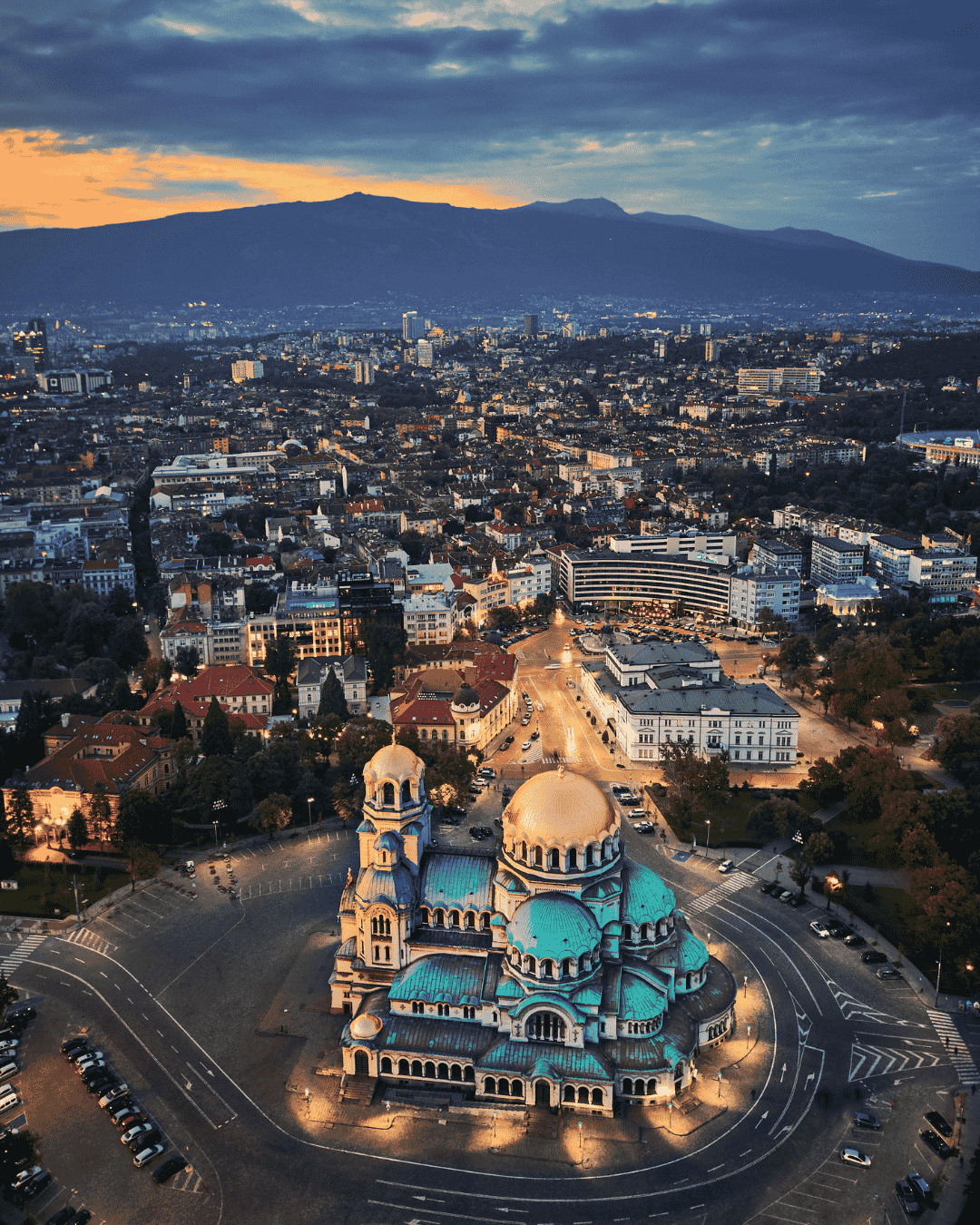
Bulgaria offers a variety of cultural, historical, and natural attractions to explore. In the capital city Sofia you can explore ancient Roman ruins, Alexander Nevsky Cathedral, and Vitosha Mountain.
You can also visit the historic town of Plovdiv, known for its well-preserved Roman amphitheatre and charming old town. And you do not want to miss out on the picturesque Rila Monastery, a UNESCO World Heritage site, in the Rila Mountains.
5 fun facts about Bulgaria
- Rakia is a well known Bulgarian alcoholic national drink. It’s made from fermented pears, grapes or apricots.
- Motto of the capital city, Sofia, is “grows but does not age”.
- It’s a homeland of yoghurt. They drink it believing that’s what makes them live longer.
- Bulgaria has the third biggest biodiversity from Eastern European countries.
- Since the year it was established, Bulgaria hasn’t changed its name. It’s the only country in Europe which can boast of this.
Ancient culture in Bulgaria
Traditions in Bulgaria are rooted deeply in history, and some of them are still practised:
- You may experience rose picking, which has also become a tourist attraction. It is worth knowing that the rose is a symbol of Bulgaria.
- Music festivals are another entertainment very common for this nation. There are events like the International Folklore Festival in Burgas or Musical Weeks in Sofia.
- The most vibrant nightlife takes place in the capital city, Sofia, but you can easily find good places for a night out with newly met friends everywhere.
- Opera and theatre remain popular among Bulgarians, and the same goes for libraries.
- When it comes to sports disciplines, Bulgaria is leading the way in boxing, tennis and gymnastics, however, their real gem is weight lifting. But the most popular sport to watch among Bulgarians is football.
Diverse cuisine in Bulgaria
Bulgaria is well-known for its wide range of dishes made from vegetables or meat. They have many kinds of salads, soups, meatballs, grilled meat pieces and sausages. All of this combined with wine or rakia may give you unforgettable culinary memories. They usually use a lot of various mild spices combined with onion or garlic. Their cuisine is often compared to Greek or Turkish. The ingredients are fresh and said to be exceptionally tasty.
Some of the national dishes are:
- Yoghurt
- White brine (feta) cheese
- Banitsa (dough filled with spinach, meat, rice, cheese etc.)
- Tarator (cold cucumber Soup)
- Shopska Salad
Finding accommodation in Bulgaria
Bulgaria has quite low costs when it comes to accommodation. The easiest way to find a place to stay is by looking online. However, be careful, sometimes on the Bulgarian market you can meet scammers. Because of the language barrier many expats decide to use real estate agents’ help. Another good idea is using Facebook groups for expats. At Job Squad we know all about how to find apartments abroad, so don’t be afraid to use our expertise.
Costs of living in Bulgaria
The costs of living in Bulgaria are relatively low compared to other European countries. Here is a more detailed description of each cost in Bulgaria:
| Description: | Cost: |
| Accommodation* (1 bedroom apartment in the city center) | €350 |
| Monthly groceries | €120-€200 |
| Cinema ticket | €6-€8 |
| Meal in a mid-range restaurant | €12-€20 |
| Gym membership (per month) | €25-€35 |
| Transport (monthly pass) | €25-€30 |
| 0.5L beer in a bar | €1,50-€3 |
| Coffee in a café | €1-€1,50 |
* Prices can vary depending on the neighbourhood, the number of people living in the apartment and facilities.
Where can I learn Bulgarian?
If you have decided to move to Bulgaria we recommend you to start learning the basics of the language since some locals may not know English. There are many online courses to learn Bulgarian that may be free or cost between €4 to €9 a month. Also, it’s important to know that their alphabet is different, so a good place to start is learning their alphabet first, there are many pictures on the internet of the translation and pronunciation of the Bulgarian alphabet, so give it a try and you’ll find is easier than expected.
Still not sure about Bulgaria?
Living and working in Bulgaria means being in the oldest country in Europe. It was Established in the 7th century and has functioned well to this day. The country has a lot to offer:
- Bulgaria has an exceptional nature with high mountains, beautiful little villages and a cosy warm atmosphere.
- Bulgarian people are very welcoming and it’s easy to find a spot in their society if you’re respectful and kind. Expats live in multiple cities in Bulgaria and there are plenty of opportunities to find expats communities in each of them.
- The mountains are perfect for hiking, and their resorts around the country are perfect for relaxing and unwinding.
- Bulgaria is known as the spa capital of the Balkans.
- It is a strong cultural country, so there’s always a festival or event going on.
- Popular activities are watersports and skiing, but if you are looking for more nightlife you should definitely head to Sofia.
Bulgaria is conveniently located in Eastern Europe, making it an excellent base for exploring bordering countries. You can easily visit Greece, Turkey, and Romania.
FAQ
No, if you are a member of the European Union (EU) you are entitled to work without visa or permit. Foreigners from outside EU countries will need a Type D work visa (for long stays) to obtain a work permit. The Bulgarian employer will have to issue to permit on behalf of their foreign employees, but the employee (you) have to provide some documents.
In general, younger generations and those working in the tourism industry or in larger cities are more likely to speak English. English is commonly taught in schools, and many Bulgarians have at least basic knowledge of the language. However, fluency levels can vary, and outside of major cities or tourist areas, it may be more challenging to find English speakers. Having a basic understanding of Bulgarian or using translation tools can be helpful when communicating in certain situations
Bulgaria’s climate is a temperate-continental climate which means:
- Spring: 5-20°C. Warm and gradually sunny.
- Summer: 18-32°C. Hot and sunny inland, cooler on the coast.
- Autumn: 10-23°C. Mild and colorful.
- Winter: -2-8°C. Warm and gradually sunny.
Buses are the primary and most often quickets form of transport in (and between) the cities and outskirts hereof. Some cities also offer trolleys. You can buy tickets (Bulgarian: bileti) at the stations at least an hour before departure, although some routes only sell tickets once the bus arrives. In the capital Sofia public transport is like in other big cities with metro, buses, trams and taxis. The network and infrastructure is good in Bulgaria.
Health insurance is mandatory in Bulgaria. EU and EEA residents are covered by their European Health Insurance (EHIC), so they are entitled to medical treatment at hospitals who are contracted with the Bulgarian National Health Insurance Fund. Emergency healthcare is free. Other medical services cost a small amount of money and are self-paid. The hospitals are more old-fashioned compared to Western standards, but the treatments and medical care are good. The staff might not speak much English.